






















Sundecay The Blood Lives Again
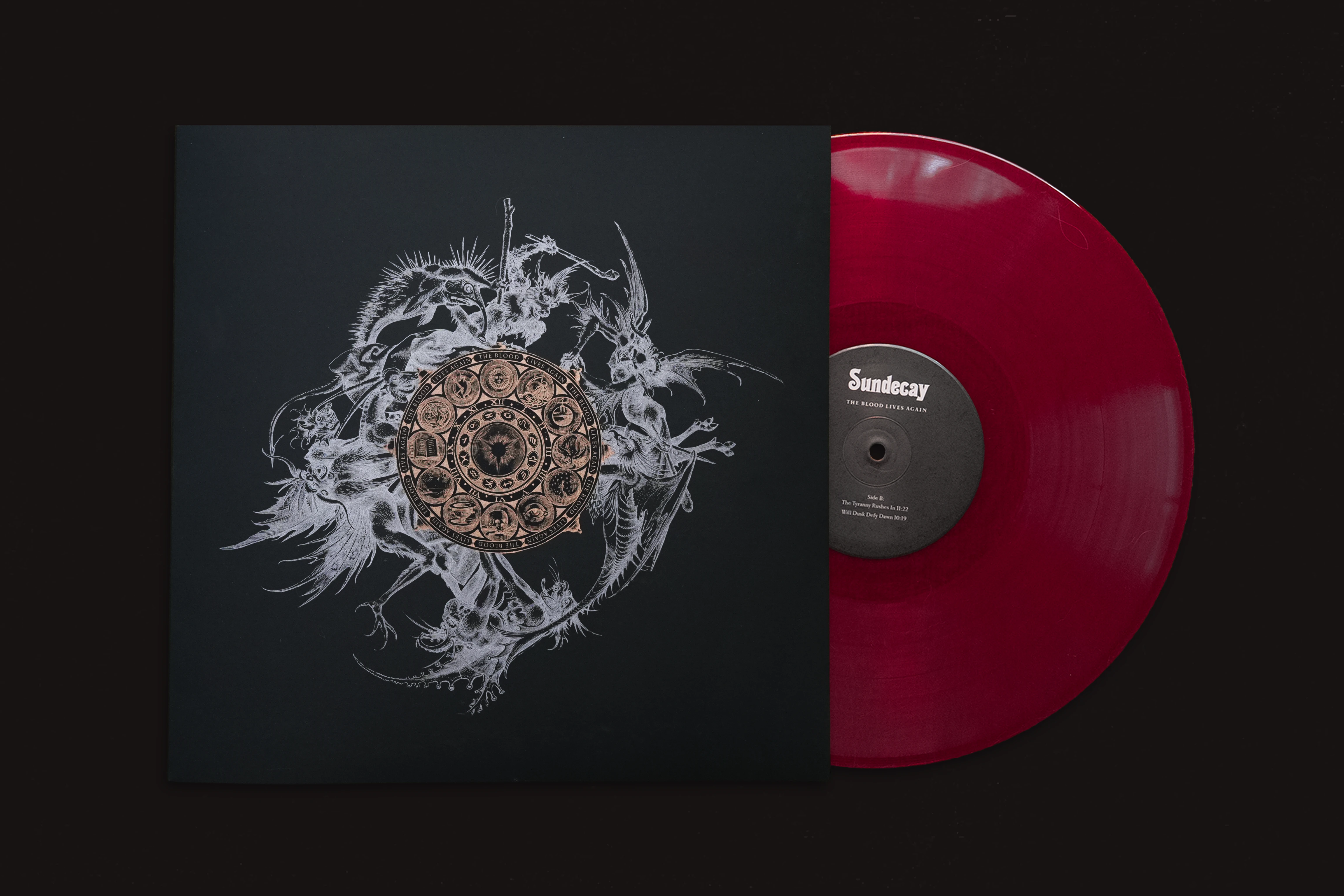
A doom metal album package designed as a mysterious artifact, extending the mythology of the music beyond sound.
Building a Visual Mythology
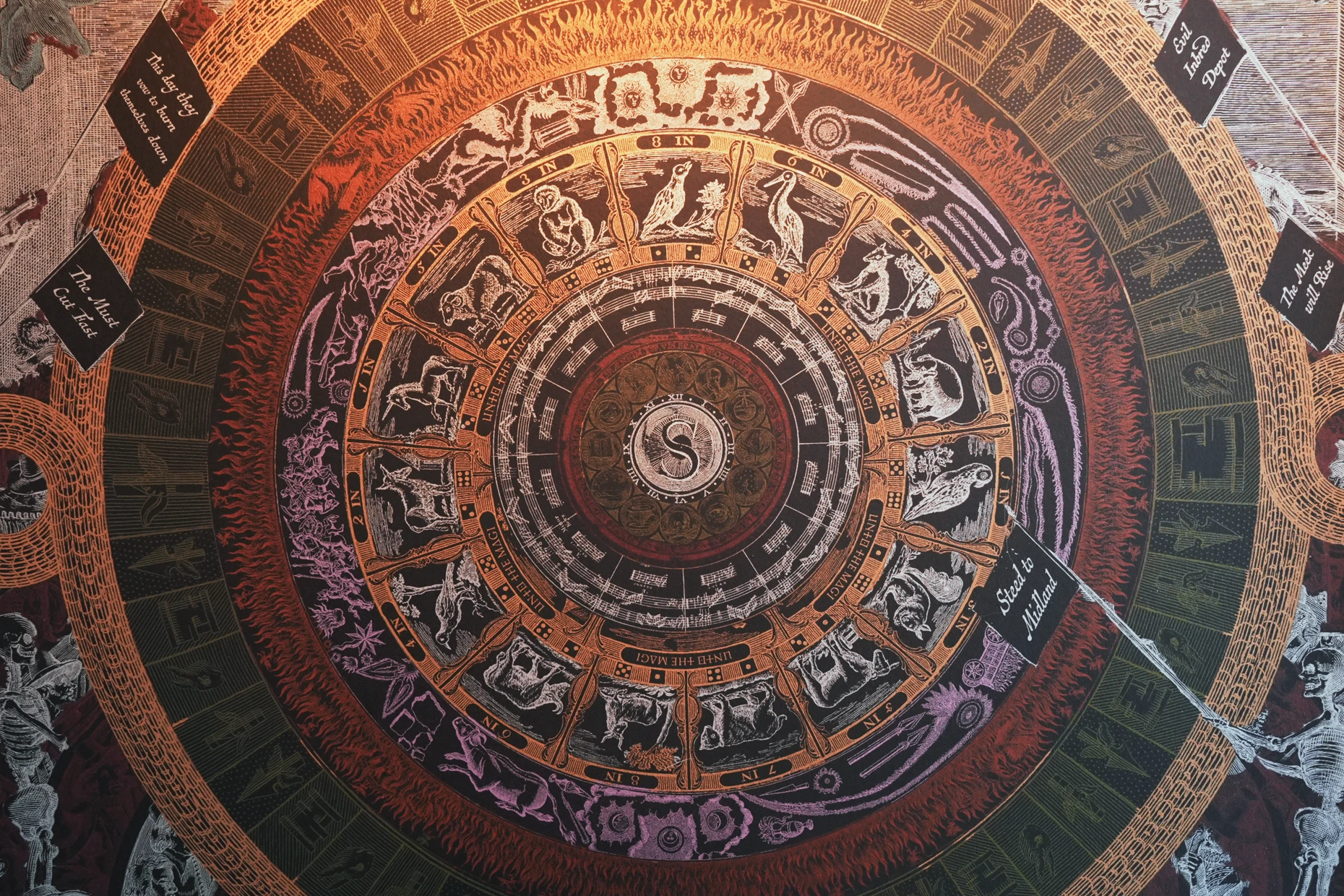
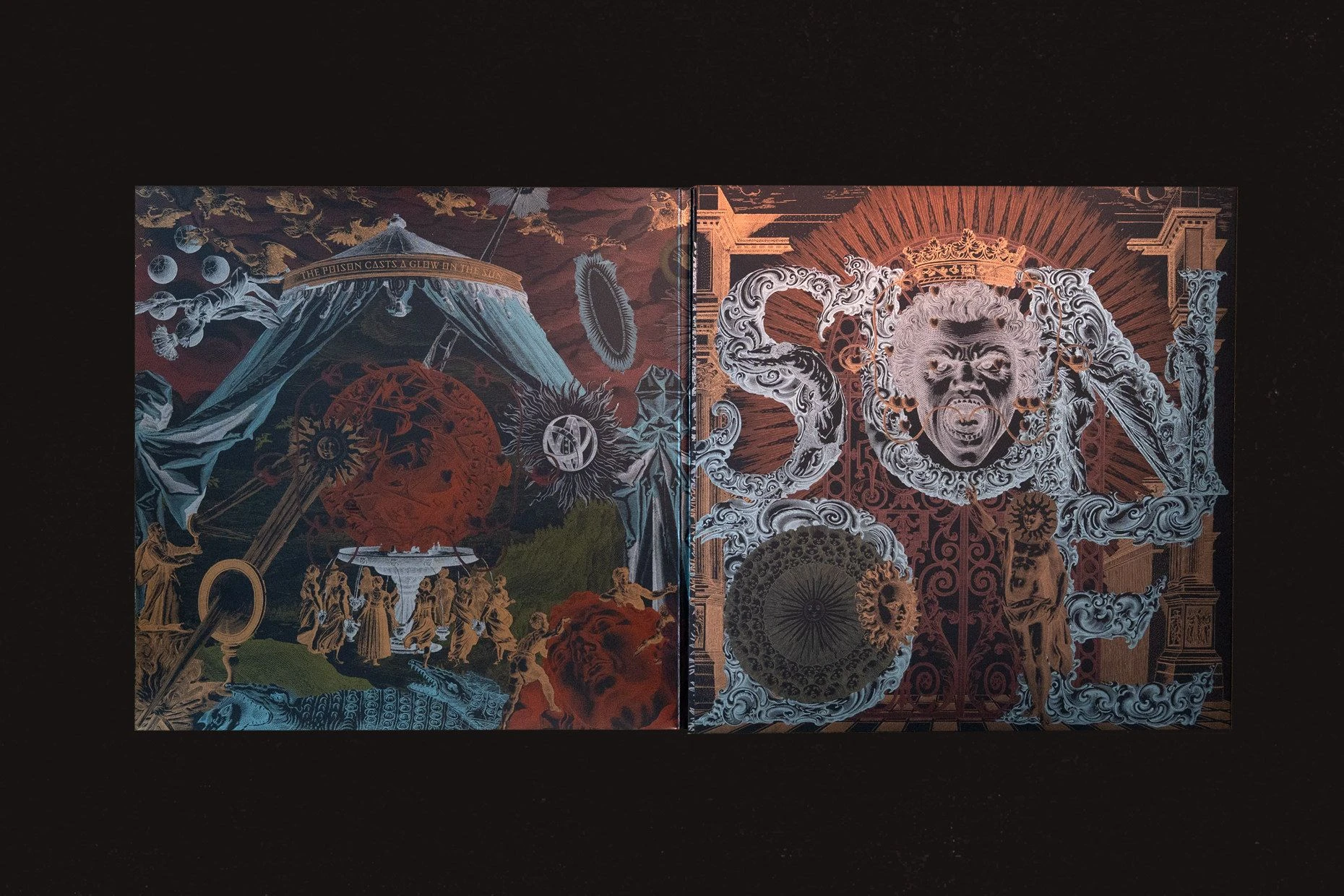
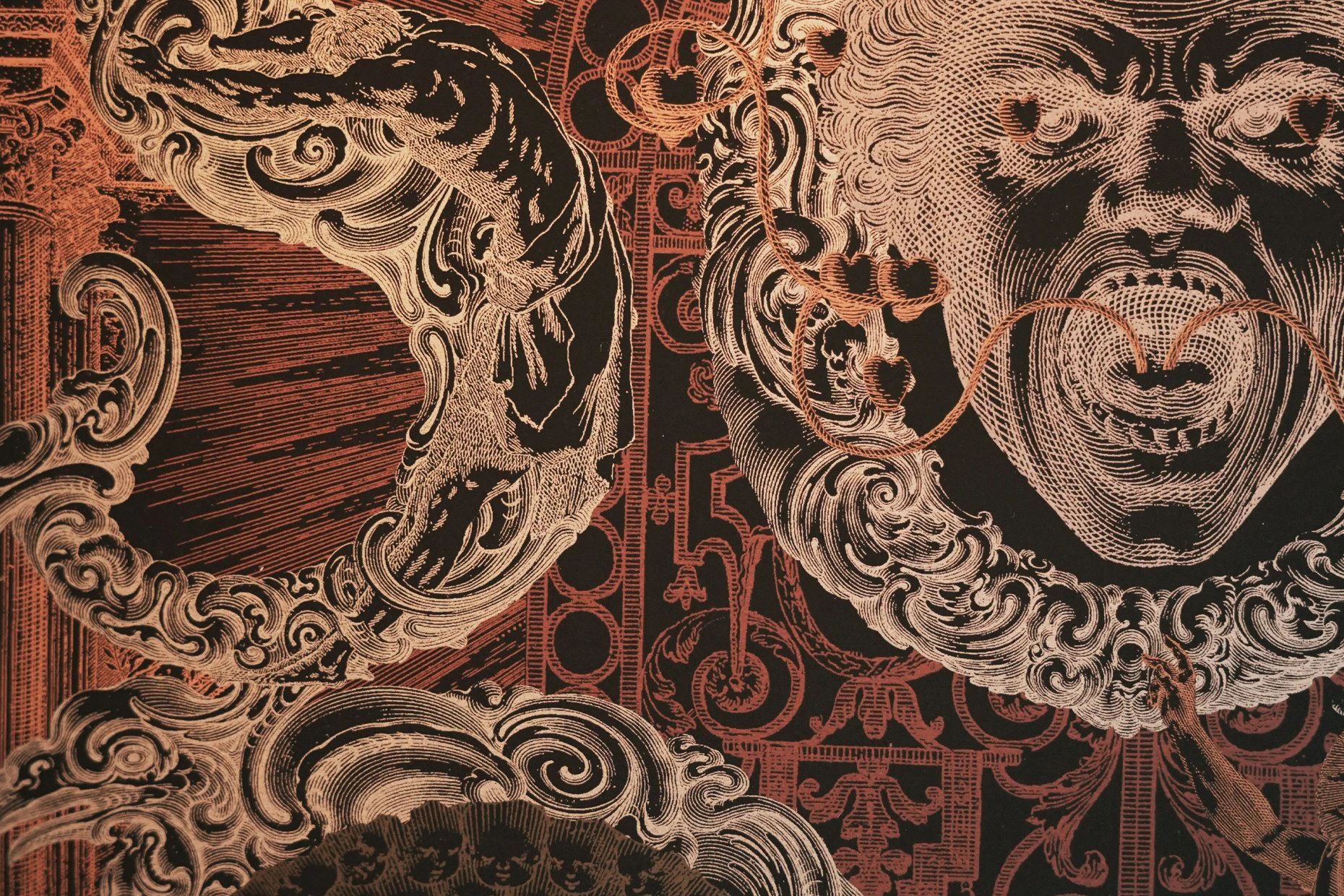

Inspired by Codex Seraphinianus, we developed a visual language that mirrored the atmosphere of the album. Archival engravings were deconstructed and recombined with original illustrations, gothic ornamentation, symbolic imagery, and fragmented narratives to create a world that felt familiar, but impossible to fully decode.
Rather than creating literal interpretations of the music, the artwork was designed to reward exploration, allowing listeners to uncover new details with each interaction.

DESIGNING BEYOND THE SLEEVE
COLLABORATION
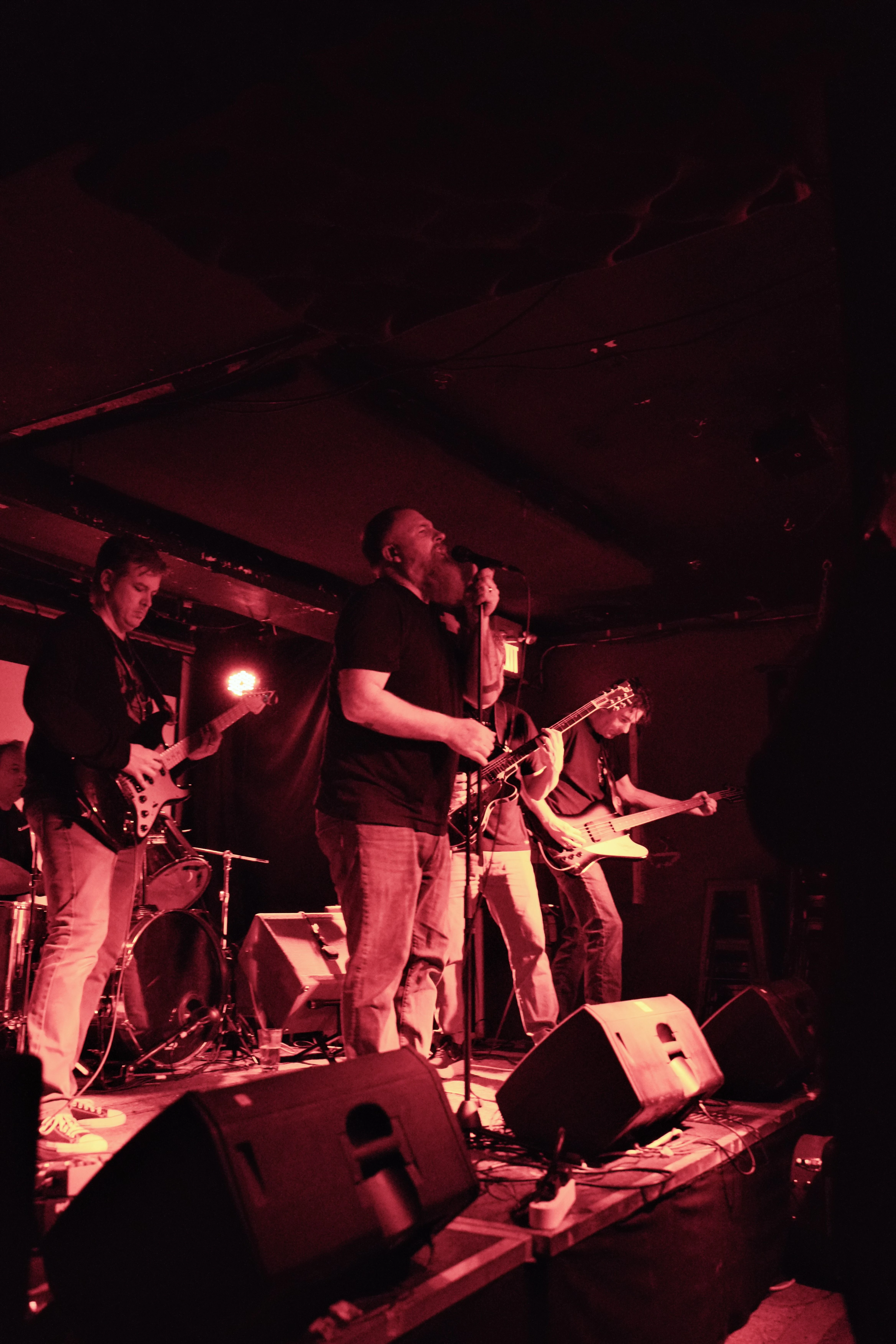
The project emerged through a unique collaboration between the band, our studio, and Flash Reproductions. In addition to fronting Sundecay, Rich Paupit owns Flash, where another member of the band also works. With artists, designers, and print specialists contributing throughout the process, production became an active part of the creative conversation rather than a final step
Printing techniques informed visual decisions. Structural concepts influenced illustration. Music, artwork, and production evolved together, allowing the physical format to become an extension of the album itself.
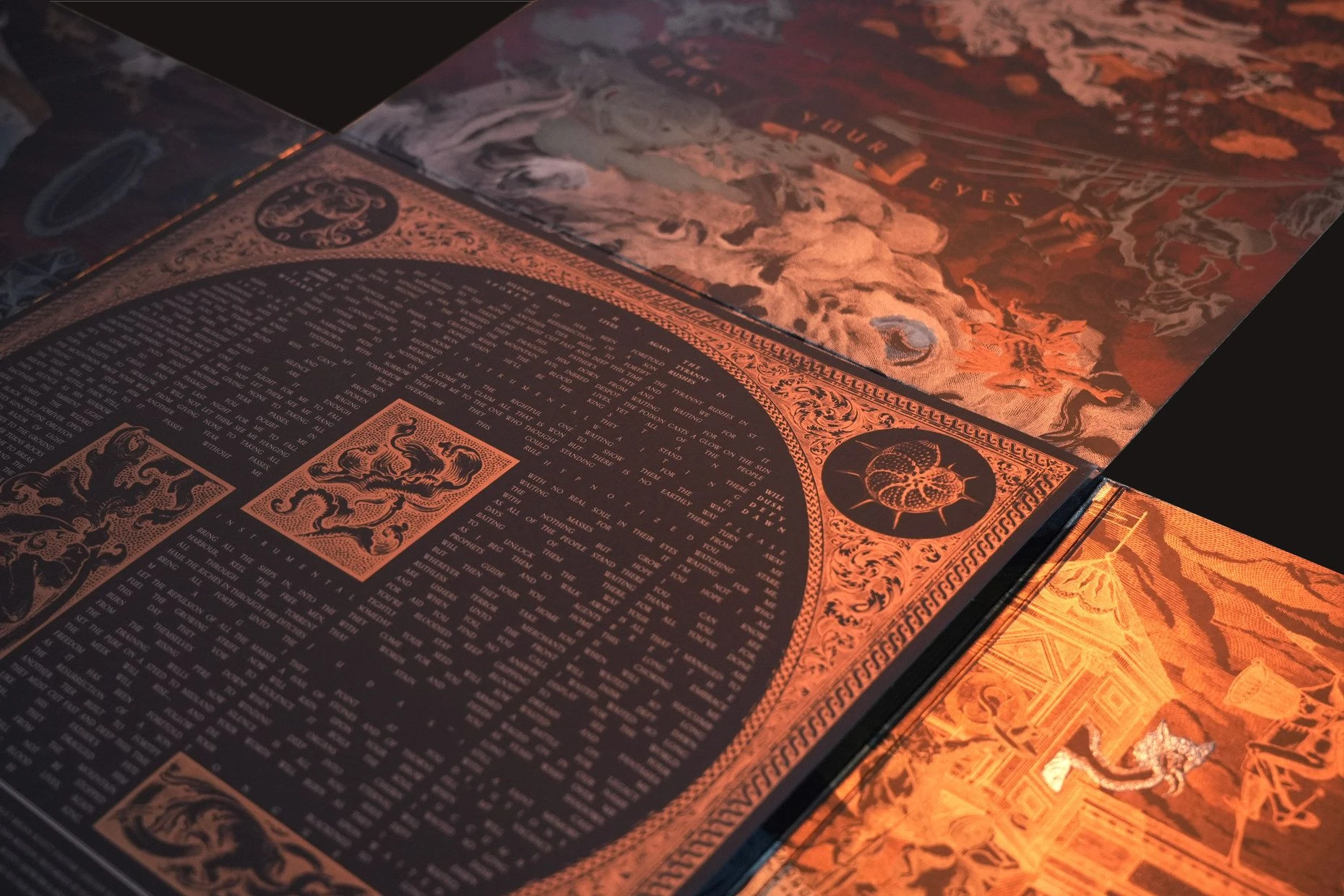
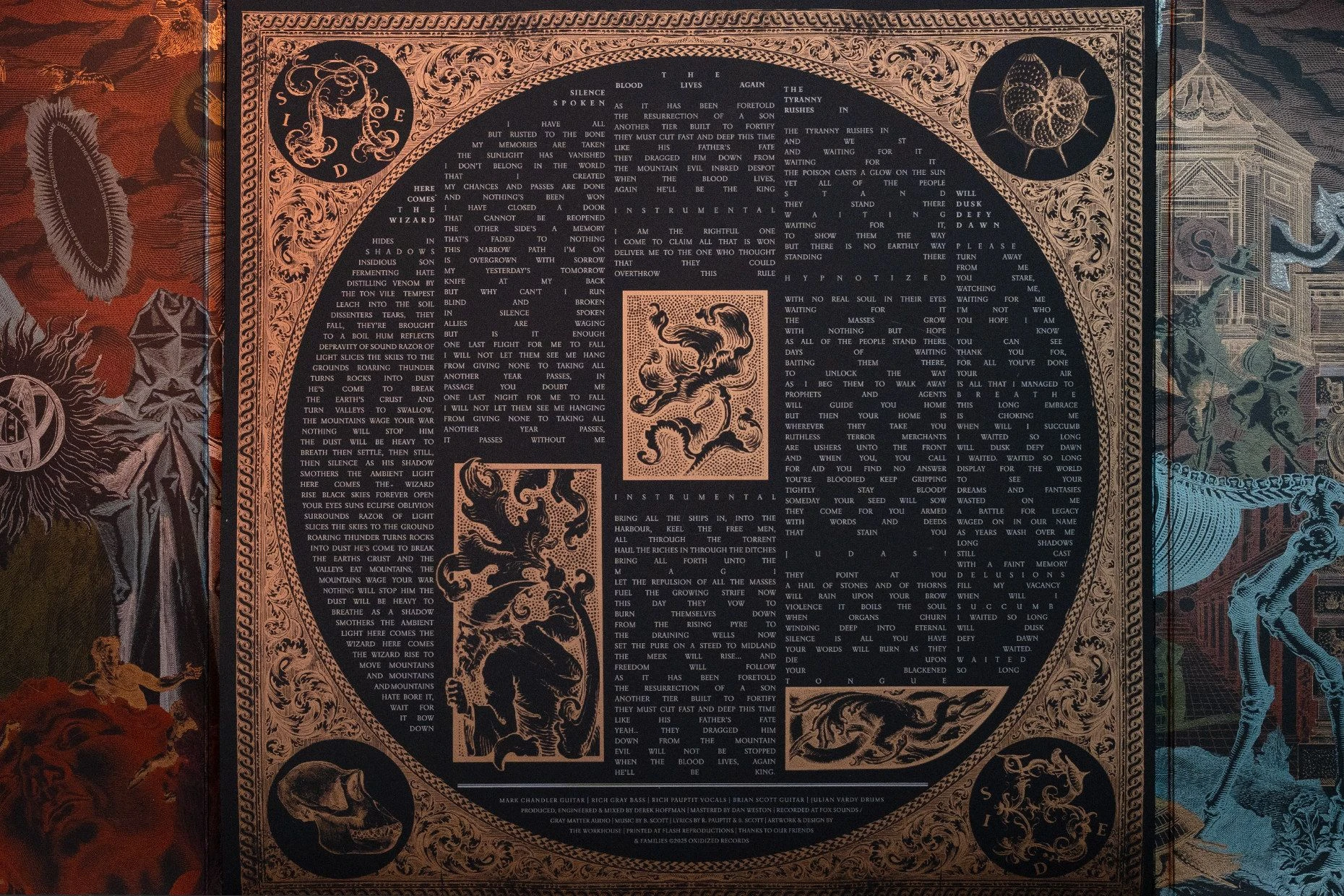
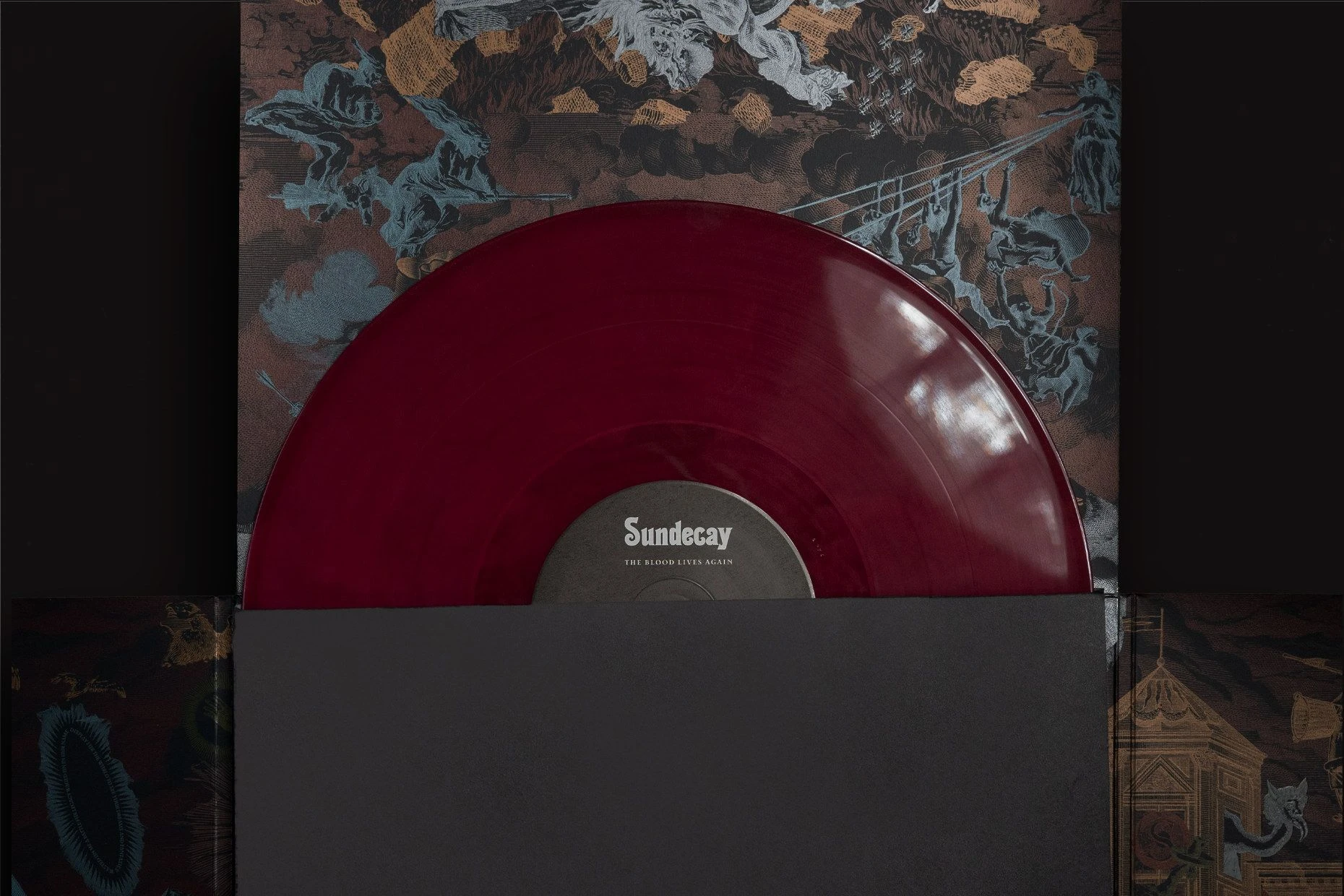
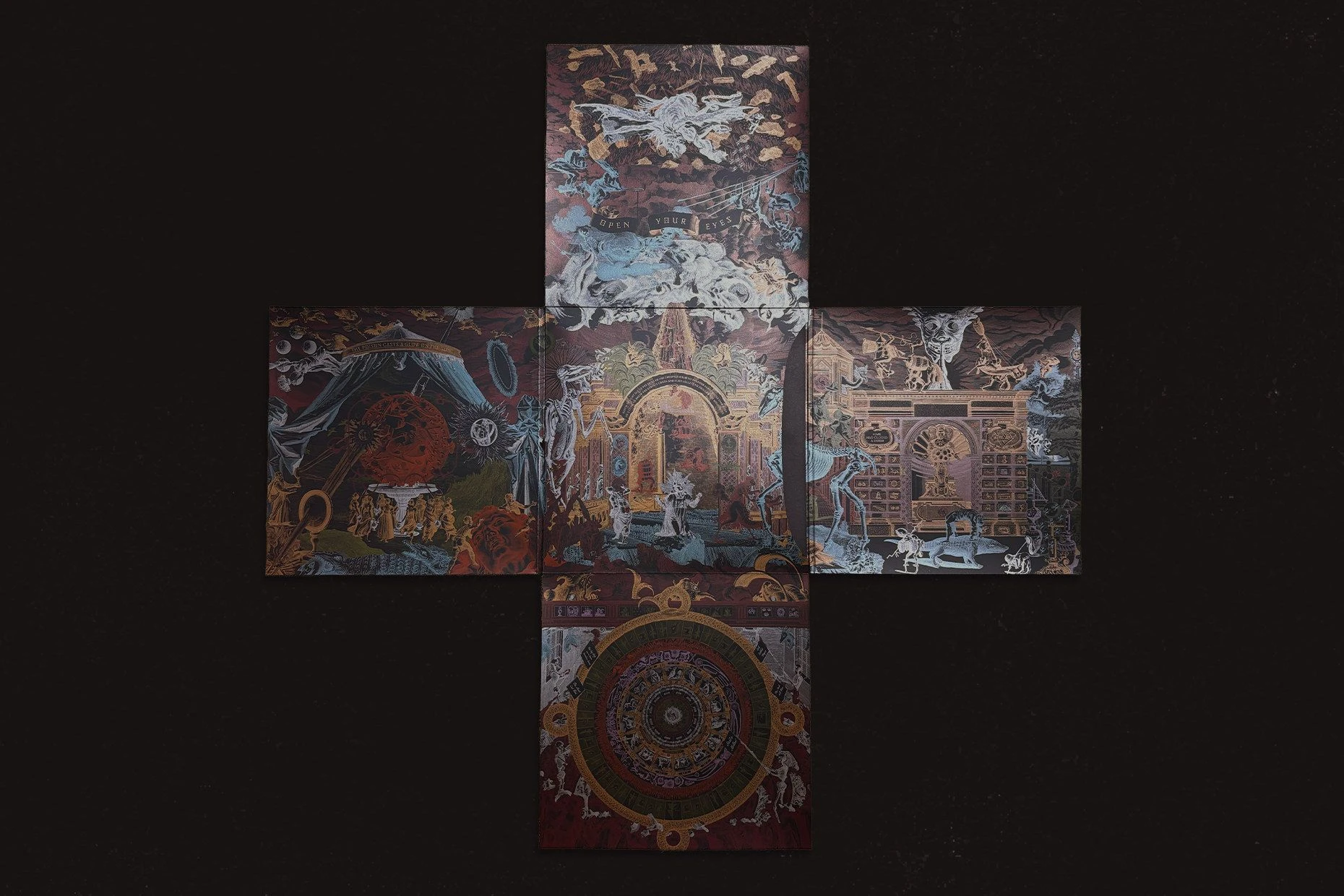
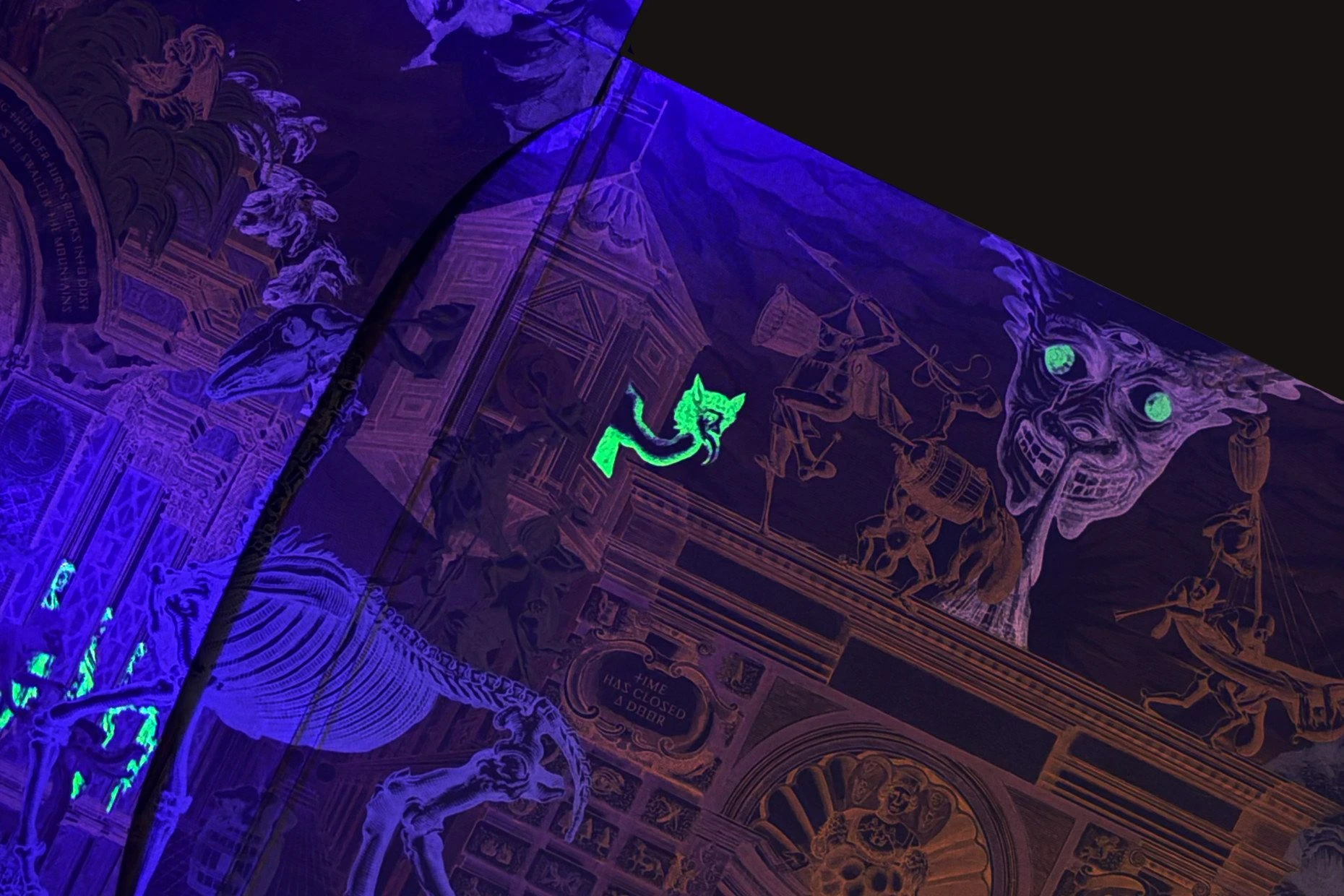
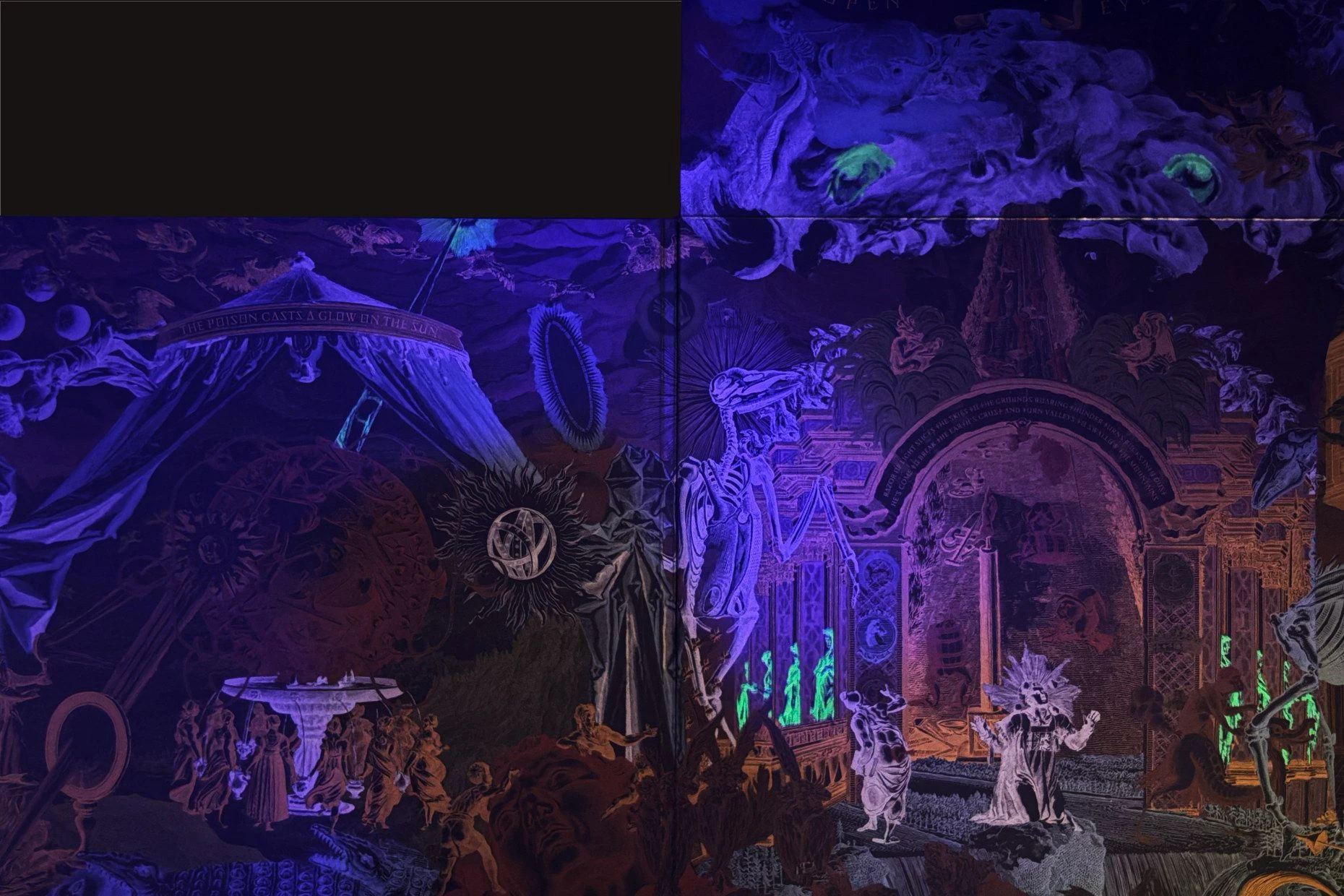
The final package unfolds from a traditional vinyl sleeve into a large cross-shaped format filled with illustration, typography, and hidden details. Six inks were used throughout production, including a dedicated glow-in-the-dark layer that reveals additional imagery under changing light conditions.
Every aspect of the package was designed to support the experience of discovery.
An Object Worth Exploring
In a music industry increasingly dominated by streaming, physical releases need to offer something audiences can’t experience digitally.
The finished package transformed The Blood Lives Again into more than an album release. It became a collectible artifact—one that extended the atmosphere of the music into a physical form.
Following its release, fans and reviewers began dissecting the artwork, uncovering recurring symbols, hidden details, and connections throughout the package. The response reinforced what the project set out to achieve from the beginning: creating an object that invites curiosity long after the record stops spinning.
Project Overview
The Blood Lives Again is the second album from Toronto doom metal band Sundecay. For its physical release, we set out to create something that could exist beyond the music itself: an object with its own mythology, designed to be unfolded, examined, and slowly decoded.
The project became a collaboration between the band, our studio, and Flash Reproductions, bringing music, artwork, and print production together from the beginning.
The Challenge
In a music industry increasingly dominated by streaming, a physical release needs to offer something that can't be experienced digitally. Rather than treating the vinyl package as a container for the album, we wanted the object to become part of the experience, carrying the atmosphere of the music into something listeners could hold and interact with.
Our Approach
The artwork, structure, and production were developed together, each becoming part of how the story of the album would unfold. Every aspect of the object was designed to reward a closer look.
Building a Visual Mythology
Inspired by Codex Seraphinianus, we developed a visual language that mirrored the atmosphere of the album. Archival engravings were deconstructed and recombined with original illustrations, gothic ornamentation, symbolic imagery, and fragmented narratives to create a world that felt familiar, but impossible to fully decode. Rather than creating literal interpretations of the music, the artwork suggests a mythology of its own, filled with recurring symbols, strange connections, and details that reveal themselves slowly.
Designing Beyond the Sleeve
The project brought together the band, our studio, and Flash Reproductions from the beginning. With artists, designers, musicians, and print specialists contributing throughout, production became part of the creative process rather than a final step. Printing techniques informed visual decisions, structural concepts influenced illustration, and the possibilities of the physical format pushed the artwork beyond the boundaries of a traditional album sleeve.
An Object Worth Exploring
The final package unfolds from a traditional vinyl sleeve into a large cross-shaped format, transforming the artwork as it opens and creating new surfaces for illustration, typography, and hidden details. Six inks were used throughout production, including a dedicated glow-in-the-dark layer that reveals additional imagery under changing light conditions. The more the package is handled and examined, the more there is to discover.
Outcome
Following its release, fans and reviewers began dissecting the artwork, uncovering recurring symbols, hidden details, and connections throughout the package. It was exactly the kind of response the project was designed to invite: people looking closer, finding things we had buried, and continuing to explore the object long after the record stopped spinning.